1. BIOGRAPHICAL DATA & CONTACTS
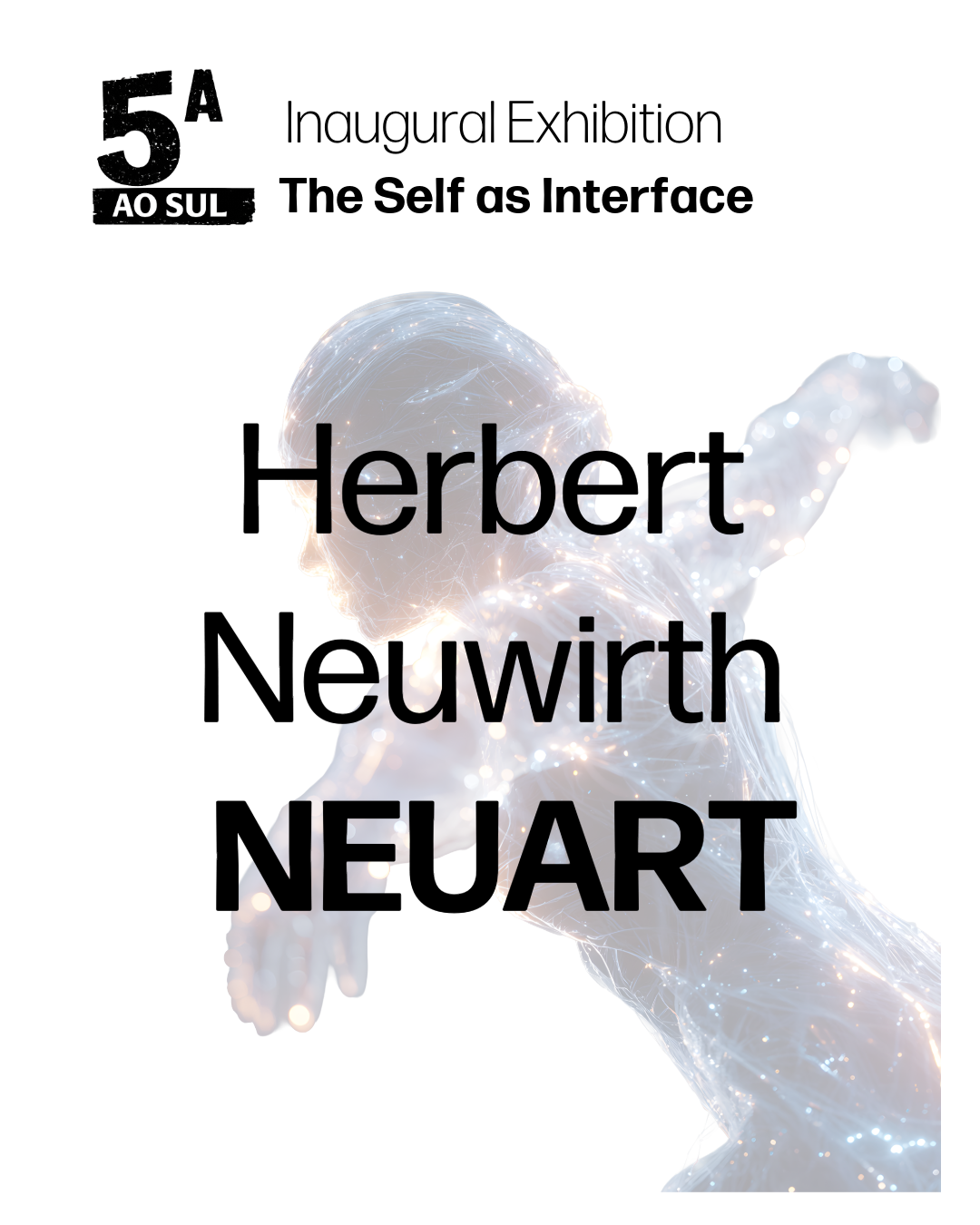
Full Name: Herbert Neuwirth
Artist Name: Herbert Neuwirth / NEUART
Nationality: German-Swedish
Country of Residence: Sweden
Website: neuart.se
Social Media (Instagram / Others): Instagram: @neuart808
2. ARTISTIC CAREER & ARTISTIC STATEMENT
Short Bio / Artistic Career:
Herbert Neuwirth is a German-Swedish visual artist based in Stockholm, working under the name NEUART. His practice encompasses photography, video art, digital moving images and conceptual objects. With a professional background in journalism, television, radio and video production, he has spent much of his career exploring how images, stories and perception shape our understanding of reality.
In recent years, artistic experimentation has developed into his central practice. His work often combines digitally constructed imagery with physical and psychological themes, moving between visual attraction, absurdity and unease. Neuwirth’s work has been presented in exhibitions in Sweden and the United Kingdom, with an upcoming screening of his video work in Ukraine.
Artistic Statement:
My practice explores the tension between freedom and restriction, attraction and unease, control and vulnerability. I often begin with familiar objects, bodies or visual symbols and combine them in ways that make their original purpose unstable. A ballet tutu may become a form of restraint; a protective object may turn threatening; something playful may reveal a darker structure beneath the surface.
Working across photography, video, digital imagery and conceptual objects, I use contradiction and visual ambiguity to create spaces where several interpretations can coexist. In my moving-image works, original music and sound design are integral to the experience, shaping rhythm, atmosphere and psychological tension rather than simply illustrating what is seen.
Digital tools and AI-assisted processes allow me to construct situations that would be difficult or impossible to realise physically, but technology is never the subject in itself. It is a means of testing how images and sounds shape perception, identity and behaviour. I am interested in the moment when an apparently simple image begins to resist certainty and asks the viewer to reconsider what they are seeing.
My practice explores the tension between freedom and restriction, attraction and unease, control and vulnerability. I often begin with familiar objects, bodies or visual symbols and combine them in ways that make their original purpose unstable. A ballet tutu may become a form of restraint; a protective object may turn threatening; something playful may reveal a darker structure beneath the surface.
Working across photography, video, digital imagery and conceptual objects, I use contradiction and visual ambiguity to create spaces where several interpretations can coexist. In my moving-image works, original music and sound design are integral to the experience, shaping rhythm, atmosphere and psychological tension rather than simply illustrating what is seen.
Digital tools and AI-assisted processes allow me to construct situations that would be difficult or impossible to realise physically, but technology is never the subject in itself. It is a means of testing how images and sounds shape perception, identity and behaviour. I am interested in the moment when an apparently simple image begins to resist certainty and asks the viewer to reconsider what they are seeing.
3. GENERAL CONTEXT AND PRACTICE
1. As a Stockholm-based artist working across photography, video, conceptual objects, and AI-assisted moving images, your practice centers on perception, contradiction, control, and vulnerability. How does your exploration of physical restrictions translate into the generative, boundless nature of AI image creation?
AI-assisted image-making gives me access to forms and situations that would be difficult or impossible to construct physically. That apparent freedom is precisely what interests me: I can use a seemingly boundless medium to make restriction visible.
In Straitutu, the virtual body may float, multiply and rotate without gravity, yet it remains trapped by the garment and by the logic imposed upon it. AI does not remove human limitations; it allows me to externalise and examine them.
This raises a broader question for me: do new technologies genuinely expand human freedom, or do we carry our inner fears, learned behaviours and need for approval into every new space we create?
The tool can widen the field of possibility, but it cannot by itself free the person using it.
2. In your work, digital moving images frequently address the tension between external expectations and internal authenticity. How do you view the role of digital software—specifically AI—as both a tool of creative liberation and an instrument that reinforces social algorithms of control?
I experience AI as both liberating and limiting. It allows me to visualise ideas that I could not realise in the same way through physical production alone, and it can lead me towards unexpected forms and associations. At the same time, AI is shaped by existing images, cultural norms and dominant ideas of beauty, identity and success. It can therefore reproduce and even amplify the very expectations and limitations that Straitutu addresses.
For me, the creative act lies partly in questioning the answers the technology provides: rejecting what feels too conventional, redirecting the process and giving the generated material a meaning that comes from my own experience and intention. Straitutu would probably not exist in this form without AI-assisted dialogue and image-making. But without my choices, personal history and interpretation, it would not carry the same meaning.
The technology expands what can be made; the artist must still decide what is worth saying.
I experience AI as both liberating and limiting. It allows me to visualise ideas that I could not realise in the same way through physical production alone, and it can lead me towards unexpected forms and associations. At the same time, AI is shaped by existing images, cultural norms and dominant ideas of beauty, identity and success. It can therefore reproduce and even amplify the very expectations and limitations that Straitutu addresses.
For me, the creative act lies partly in questioning the answers the technology provides: rejecting what feels too conventional, redirecting the process and giving the generated material a meaning that comes from my own experience and intention. Straitutu would probably not exist in this form without AI-assisted dialogue and image-making. But without my choices, personal history and interpretation, it would not carry the same meaning.
The technology expands what can be made; the artist must still decide what is worth saying.
REGARDING THE ARTWORK “STRAITUTU” (2026)
1. “Straitutu” revolves around an impossible hybrid garment: the straitjacket (a symbol of institutional restraint, medicalized control, and forced isolation) merged with the ballet tutu (a symbol of hyper-disciplined grace, aesthetic perfection, and public performance). What inspired this paradoxical collision between medical confinement and theatrical performance?
The work grew out of my own experience of paralysis in different forms: moments when a person may appear capable of movement, yet feels unable to act freely or choose a direction. I wanted to give that often invisible state a physical form. The straitjacket makes restriction immediately visible, while the tutu carries a more ambiguous meaning. Ballet suggests lightness, freedom and self-expression, but also extreme discipline, aesthetic perfection and the pressure to perform for others.
By merging the two garments, I created a body that seems expected to dance gracefully while being prevented from moving on its own terms. The work deliberately leaves the source of the confinement unresolved. It may come from society, institutions, behavioural and beauty norms, the desire to please, or limitations that have gradually been internalised.
Often these forces are inseparable: external expectations eventually become an inner voice. The collision therefore represents not only physical restraint, but the experience of being frozen between who one is, who one wishes to become and who one believes one is expected to be.
2. The central figure in “Straitutu” is headless, floating, and endlessly replicated or rotated inside a void, occasionally disrupted by digital glitch horizontal bars. Does this headless, disembodied torso suggest that under digital hyper-visibility, the human mind is rendered obsolete while the performing torso becomes a commodity?
The absence of a head is important, but I do not see it primarily as suggesting that the mind has become obsolete. By removing the face, I also remove a fixed identity and gender. The figure may therefore represent many different people, while the viewer is less restricted by assumptions about who is trapped inside the garment.
There is also a quiet tension between the traditionally feminine coding of ballet and the more masculine associations that institutional restraint evokes for me. Because the body remains ungendered, however, this contrast is left open rather than assigned to a specific person.
At the same time, the headlessness suggests a loss of agency: the figure is not acting according to its own mind. Without attention to one’s inner needs, values and direction, it becomes difficult to find an inner compass. The continuous rotation reflects this condition — movement without progress, circling repeatedly without arriving anywhere.
The body remains visible and performs, but its own voice can barely be heard. In the original music and sound design created by TONYMELODICS, that voice is present only indirectly, as fragile traces within the music-box melody. The work may also evoke the commodification of the performing body, but for me its deeper concern is the loss of contact with the self.
There is also a quiet tension between the traditionally feminine coding of ballet and the more masculine associations that institutional restraint evokes for me. Because the body remains ungendered, however, this contrast is left open rather than assigned to a specific person.
At the same time, the headlessness suggests a loss of agency: the figure is not acting according to its own mind. Without attention to one’s inner needs, values and direction, it becomes difficult to find an inner compass. The continuous rotation reflects this condition — movement without progress, circling repeatedly without arriving anywhere.
The body remains visible and performs, but its own voice can barely be heard. In the original music and sound design created by TONYMELODICS, that voice is present only indirectly, as fragile traces within the music-box melody. The work may also evoke the commodification of the performing body, but for me its deeper concern is the loss of contact with the self.
3. The documentation stills show identical figures arranged in a rhythmic, chorus-line formation. How does this spatial repetition comment on the pressures of contemporary social media platforms, where individuals are incentivized to perform identical, highly curated identities?
I largely agree with this interpretation. Social groups and cultural “bubbles” have always existed, but in the physical world they were fewer and more geographically limited, and one could sometimes choose more consciously which environments to enter. Social media has multiplied these spaces and made them global, while algorithms continuously draw us towards particular images, behaviours and ideals. The wealthy, beautiful and highly visible often become models for what appears desirable, successful or culturally relevant. It becomes increasingly difficult not to compare oneself and feel inadequate.
The repeated figures in Straitutu suggest this pressure to become both visible and interchangeable: each body appears separate, yet performs within the same rhythm and constraint. I imagine them as enclosed in individual bubbles that can travel through the entire digital world without necessarily becoming freer.
At the same time, this global connection is not only negative. Someone who once felt like an outsider in a small town can now discover others with similar experiences, identities or forms of strangeness. The same network that standardises behaviour can also create recognition and community.
For me, the tension lies precisely there: the digital world can help us find ourselves through others, while also making it harder to hear where our own identity ends and collective, unthinking imitation and performance begin.
The repeated figures in Straitutu suggest this pressure to become both visible and interchangeable: each body appears separate, yet performs within the same rhythm and constraint. I imagine them as enclosed in individual bubbles that can travel through the entire digital world without necessarily becoming freer.
At the same time, this global connection is not only negative. Someone who once felt like an outsider in a small town can now discover others with similar experiences, identities or forms of strangeness. The same network that standardises behaviour can also create recognition and community.
For me, the tension lies precisely there: the digital world can help us find ourselves through others, while also making it harder to hear where our own identity ends and collective, unthinking imitation and performance begin.
4. In your description, you note that the digitally constructed body is “unable to act on its own terms.” How do the periodic visual glitches and static disruptions in the video act as moments of systemic error or potential acts of subversion against total algorithmic containment?
The glitches are deliberately ambiguous. They can resemble interference from a surveillance camera observing the figure — either as a performer on a stage or as someone confined within an institution. In that sense, the body is never entirely alone. It is being watched, recorded and evaluated.
The disruptions also introduce a small but important form of resistance. The rotation and repetition are no longer completely smooth or harmonious. Something begins to interrupt the expected performance. The glitches may therefore be read as traces of an inner refusal, even if the figure is not yet able to break free.
They also suggest instability within the system itself. What appears controlled and permanent may already be beginning to fail. The horizontal disturbances become early cracks: signs that the image, the mechanism or the entire structure could lose power and collapse at any moment.
I prefer not to define whether the error comes from the system or from the figure, because that uncertainty leaves open the possibility that breakdown and liberation may begin in the same moment.
The disruptions also introduce a small but important form of resistance. The rotation and repetition are no longer completely smooth or harmonious. Something begins to interrupt the expected performance. The glitches may therefore be read as traces of an inner refusal, even if the figure is not yet able to break free.
They also suggest instability within the system itself. What appears controlled and permanent may already be beginning to fail. The horizontal disturbances become early cracks: signs that the image, the mechanism or the entire structure could lose power and collapse at any moment.
I prefer not to define whether the error comes from the system or from the figure, because that uncertainty leaves open the possibility that breakdown and liberation may begin in the same moment.
INTERSECTION WITH THE THEME: “THE SELF AS INTERFACE”
1. Your piece asks a fundamental diagnostic question: “What remains of an authentic self when identity is translated into image, controlled by expectations and continuously performed for others?” Within the framework of “The Self as Interface,” do you consider the digital screen to be a stage for performance or a cage for confinement?
I see the digital screen as both a stage and a cage. It is also an interface: the surface through which the self becomes visible, translated and exposed to others. Presenting Straitutu in an online exhibition gives the work an opportunity to perform before people who might never encounter it in a physical gallery. Ideally, that performance can interrupt the flow of images for a moment and provoke reflection, recognition or discussion. In this sense, the screen is a space of access and possibility.
At the same time, digital visibility is governed by attention, repetition and approval. It is often far easier to spread a trend in which thousands of people repeat the same gesture or dance than to create space for a difficult or thoughtful conversation. Anyone who departs from familiar expectations may also face ridicule, hostility or judgement on an enormous scale. Under that pressure, conformity can feel safer: one enters the cage voluntarily, performs what is rewarded and gradually loses contact with one’s own needs and values. The interface then no longer simply connects the self to the world; it begins to reshape the self according to what the system rewards.
What remains of the authentic self may therefore be fragile, but not necessarily absent. It survives in the hesitation before imitation, in the discomfort of not fitting in, and in the decision to express something that may not be immediately liked or understood.
For me, Straitutu occupies that contradiction: it performs its confinement through a digital interface while quietly asking whether visibility can become a first step towards freedom — or merely another form of restraint.
At the same time, digital visibility is governed by attention, repetition and approval. It is often far easier to spread a trend in which thousands of people repeat the same gesture or dance than to create space for a difficult or thoughtful conversation. Anyone who departs from familiar expectations may also face ridicule, hostility or judgement on an enormous scale. Under that pressure, conformity can feel safer: one enters the cage voluntarily, performs what is rewarded and gradually loses contact with one’s own needs and values. The interface then no longer simply connects the self to the world; it begins to reshape the self according to what the system rewards.
What remains of the authentic self may therefore be fragile, but not necessarily absent. It survives in the hesitation before imitation, in the discomfort of not fitting in, and in the decision to express something that may not be immediately liked or understood.
For me, Straitutu occupies that contradiction: it performs its confinement through a digital interface while quietly asking whether visibility can become a first step towards freedom — or merely another form of restraint.
2. By utilizing AI-assisted moving images to simulate an impossible garment trapping a virtual body, “Straitutu” operates as a self-referential loop. How do you envision the audience experiencing this tension between delicate beauty and claustrophobic restriction when navigating the work in Galeria 5ª ao Sul’s virtual 3D gallery space?
I hope the audience is first drawn into the work almost hypnotically, through its slow rotation, repetition, visual delicacy and music-box-like soundscape. Rather than immediately asking, “What does this mean?”, I would like viewers to remain with the work long enough for its contradictions to become felt physically: beauty alongside discomfort, movement alongside paralysis, and openness alongside confinement.
The original music and sound design by TONYMELODICS are essential to this experience. The melody may initially feel fragile and inviting, but it also carries a sense of repetition and unease, as though an inner voice is trying to make itself heard from within the loop.
The virtual 3D gallery adds another layer. The viewer moves freely through a digital space while encountering a body that appears unable to escape its own digital enclosure. This contrast may turn the screen into both a window and a mirror.
I do not want to prescribe a single interpretation; I hope viewers begin to notice what happens within themselves, whether they recognise aspects of their own experience, and what forces may be limiting their freedom. Perhaps that recognition can become a small first step towards recovering an inner direction and imagining how to move differently.
The original music and sound design by TONYMELODICS are essential to this experience. The melody may initially feel fragile and inviting, but it also carries a sense of repetition and unease, as though an inner voice is trying to make itself heard from within the loop.
The virtual 3D gallery adds another layer. The viewer moves freely through a digital space while encountering a body that appears unable to escape its own digital enclosure. This contrast may turn the screen into both a window and a mirror.
I do not want to prescribe a single interpretation; I hope viewers begin to notice what happens within themselves, whether they recognise aspects of their own experience, and what forces may be limiting their freedom. Perhaps that recognition can become a small first step towards recovering an inner direction and imagining how to move differently.