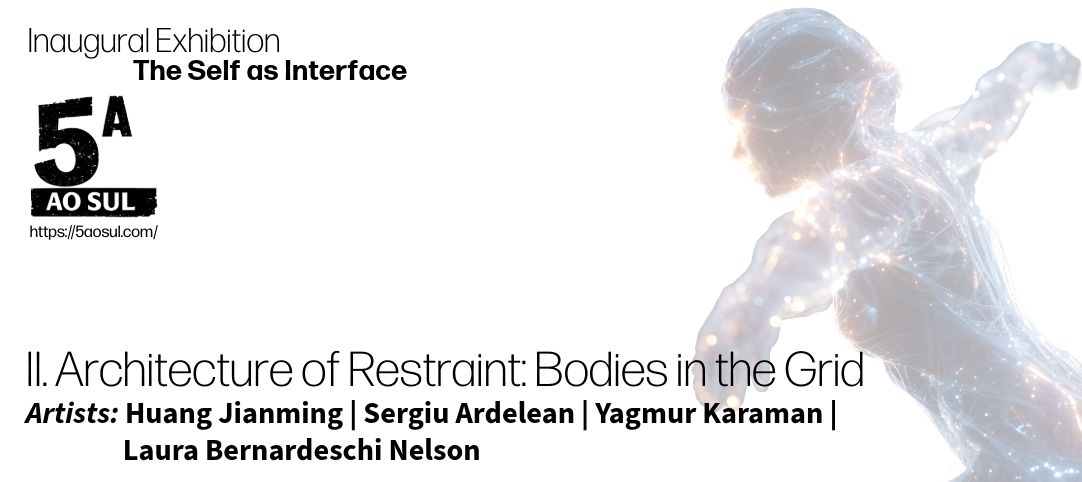
AXIS II — ARCHITECTURE OF RESTRAINT: BODIES IN THE GRID
The second axis of the exhibition examines the biopolitical, geopolitical, and infrastructural apparatuses that discipline, extract, and categorize human experience in the contemporary era. Far from existing as a neutral or disembodied realm, the digital sphere operates as a rigorous grid of restraint: a complex system of algorithmic surveillance, labor flows, and administrative procedures that reduce the living subject to operational data, commodities, or statistical metrics. Bringing together works utilizing security X-ray scanning, interactive wireframe sculpture, 3D animations of bodily extraction, and graphic overlays of networked webs upon the landscape, this section interrogates the violence of total transparency, revealing the vital fissures where intimacy, affect, and vulnerability persist as quiet forms of resistance.
Huang Jianming
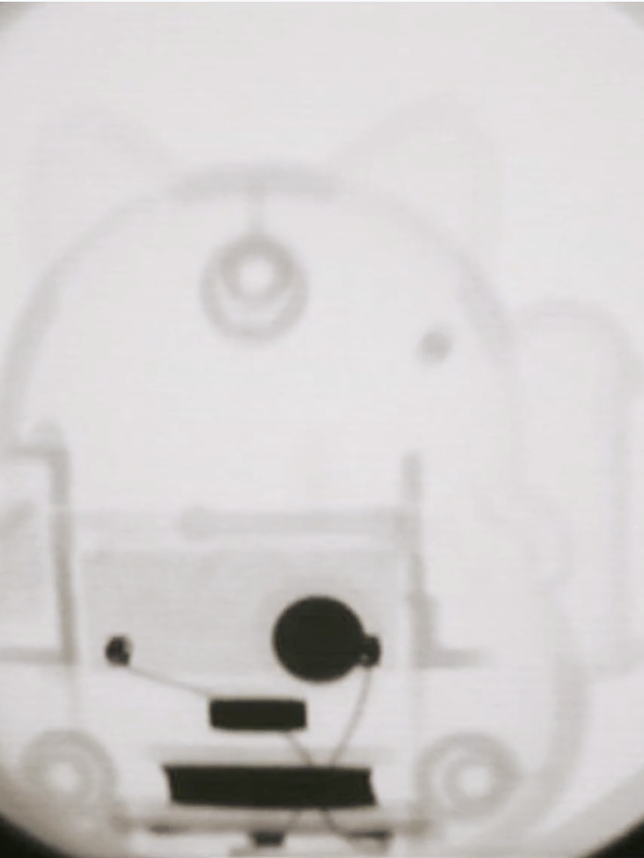
Investigating systems of power and transnational surveillance apparatuses that mediate the migrant condition, Huang Jianming subverts X-ray technology—traditionally deployed for security screening at borders and transit checkpoints—into an instrument of intimate inquiry. By scanning emotionally charged personal keepsakes belonging to Chinese students living in Europe and confronting this clinical transparency with fragmented voice testimonies, the artist critiques the transactional indifference of institutional governance. The work exposes how the contemporary "assembly line" flattens human bodies into manageable data, demonstrating that the opacity of memory and emotional attachment remains fundamentally beyond the machine's capacity to decode.
Sergiu Ardelean
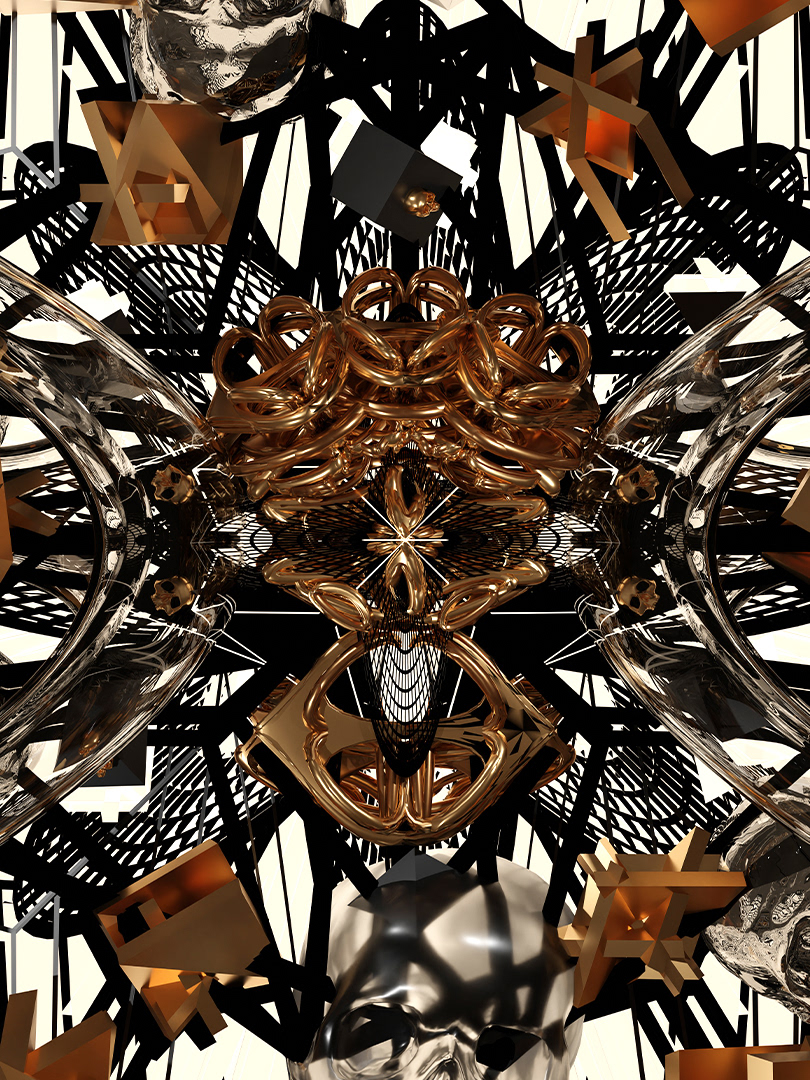
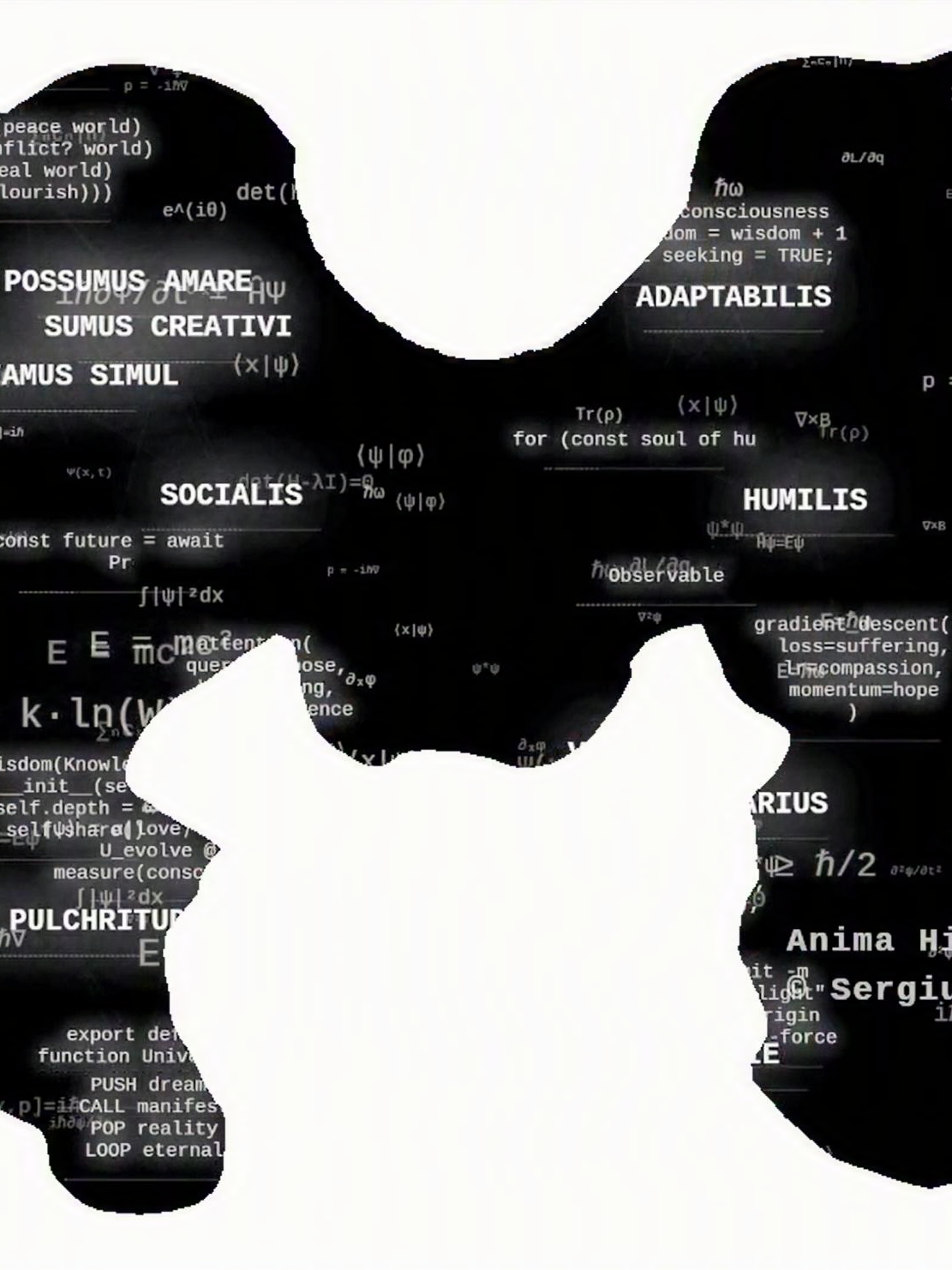
Drawing upon decades of expertise in light design and interactive stage technologies, Sergiu Ardelean reinterprets the myth of Icarus to articulate contemporary hubris: the accelerated, uncritical ascent of a civilization intoxicated by its own technological power. A life-sized human figure, sculpted in raw galvanized steel wire, bears Plexiglas wings where C++ code classes, physics equations, and classical Latin moral vocabulary clash in perpetual tension. Through proximity sensors and a pulsing mirrored heart, the spectator is involuntarily integrated into the installation's circuit, confronting their own unconscious complicity and the precarious boundary between human agency and total systemic absorption.
Yagmur Karaman
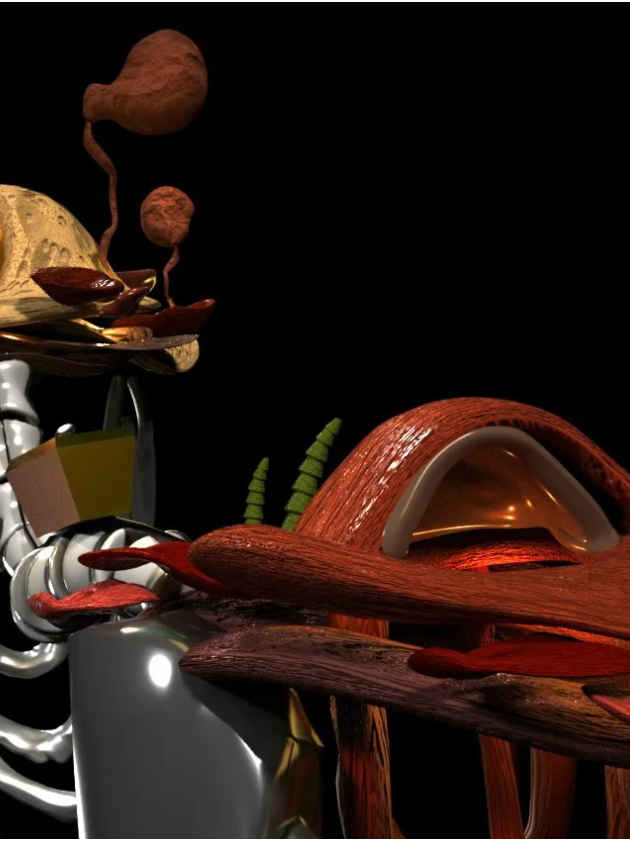
Rooted in experimental animation and 3D digital sculpting, Yagmur dismantles the sanitized facade of digital culture to expose the physical exhaustion obscured behind screens. In Organ Mines, the worker’s body collapses into industrial machinery, fusing flesh, vital organs, and mechanical components into a single site of extraction under late capitalism. By dissolving the boundary between the living subject and the workspace, the artist reframes the human body as a biological interface optimized for economic yield, forcing virtual gallery visitors to confront their own alienation and the bodily toll exacted by continuous digital labor.
Laura Bernardeschi Nelson
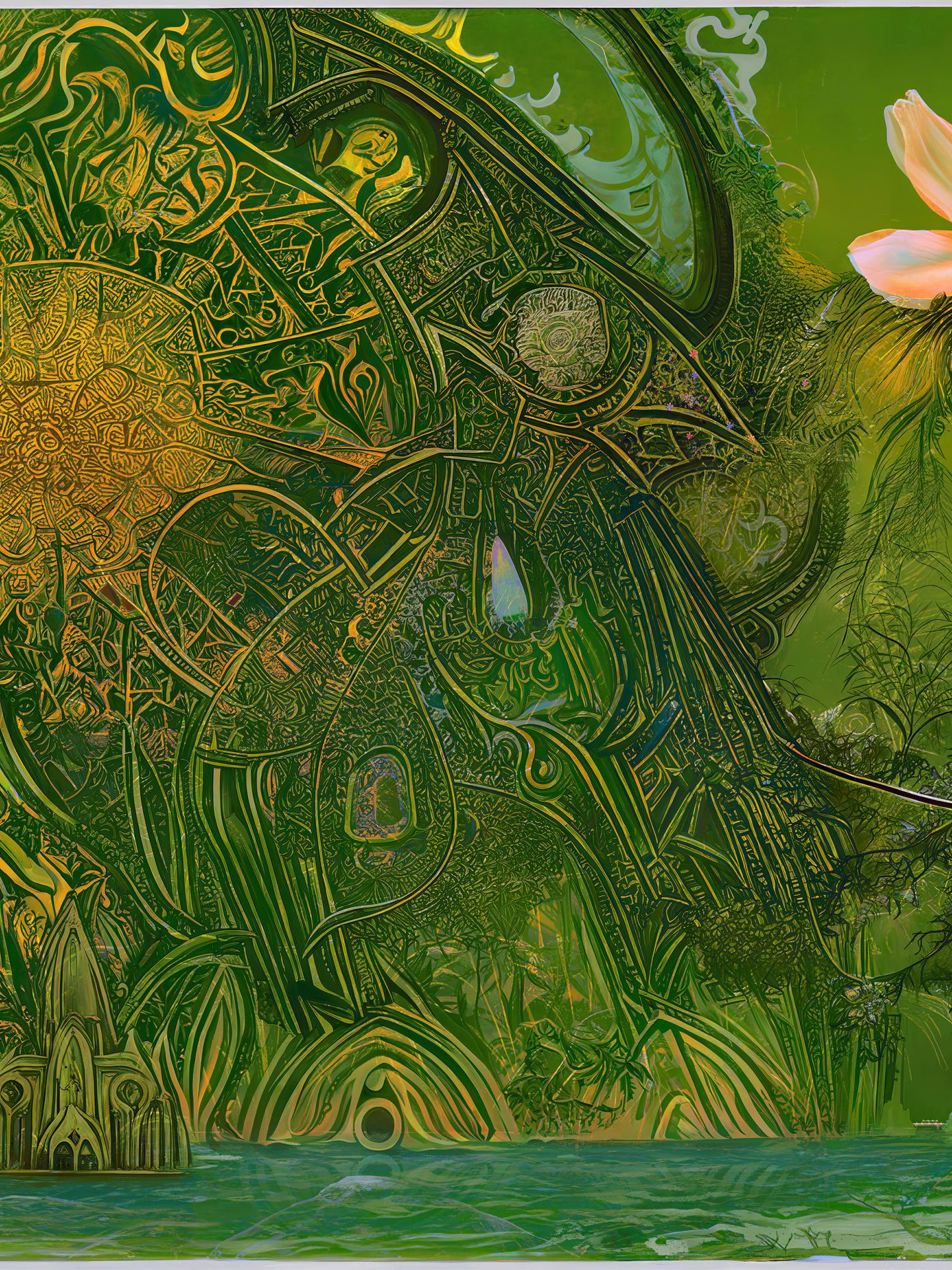
Informed by a literary background in dystopian fiction and an interdisciplinary practice spanning traditional and post-digital media, Laura Bernardeschi Nelson explores human mediation and isolation within omnipresent networks. In Beyond The Self, an anonymous silhouetted figure gazes across a natural landscape from a cliffside, enmeshed within a geometric web of nodes and lines that acts simultaneously as a lens, a filter, and a cage. Exhibited within the gallery's 3D environment, the work functions as a meta-reflective mirror, prompting networked viewers to question whether they are navigating the system or surrendering their authentic emotional depth to the sterile convenience of the screen.